Smile Icon Embroidery Review
As a designer who spends more time than I care to admit staring at stitch charts and fabric swatches, I have learned that not every digital asset translates well into thread. We often see beautiful vector graphics on design marketplaces and immediately assume they will look stunning on a tote bag or a baby onesie. But the reality of machine embroidery design is unforgiving. A simple line art graphic can either become a clean, professional statement piece or a frustrating mess of skipped stitches if you do not evaluate it correctly before hitting "start."
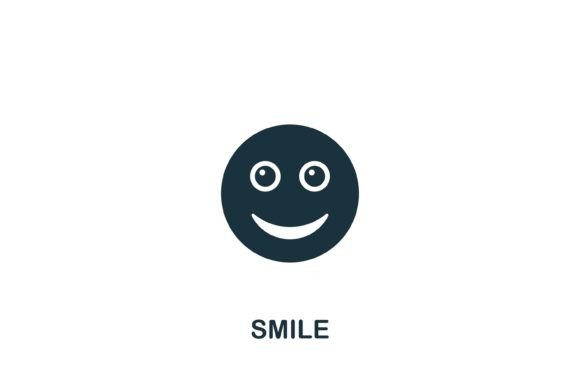
This week, I pulled up the Smile Icon, a minimalist success symbol described as a simple line element suitable for templates, web design, and infographics. It comes in standard editable formats like EPS, JPG, AI, and SVG. On paper, it sounds perfect for modern, clean branding. But does it hold up when converted into an embroidery file for real-world use? Let’s break down how this graphics element performs when moved from a screen to a hoop.
First Impressions: The Mood of Minimalism
The immediate appeal of the Smile Icon is its restraint. In a market saturated with complex floral motifs and intricate character designs, simplicity is a luxury. This icon creates a mood of positivity, approachability, and modern ease. It feels lightweight and uncluttered. For a designer looking to create custom apparel that speaks to a contemporary audience, this visual personality is hard to beat.
However, simplicity in digital embroidery file terms can be deceptive. Because the design relies on thin lines rather than heavy fills, it demands precision. The visual personality here is one of clarity. It suggests a brand that values efficiency and happiness without the noise. When I first imagined using this for a client project, I didn't picture it as the main focal point of a large jacket back. Instead, I saw it as a subtle, confident accent—a small but significant detail that adds a touch of warmth to a handmade product.
Real-World Application: From Screen to Stitch
To truly test the viability of the Smile Icon, I put myself in the shoes of a small business owner preparing inventory for a craft fair or an Etsy shop. Imagine you are creating a line of personalized gifts for the holiday season. You decide to focus on kitchen towels and aprons because they are high-demand items with low return rates. How does this icon perform in that context?
On a cotton tea towel, the Smile Icon works beautifully. The natural fiber provides enough stability for the thin lines to remain crisp. If you use a contrasting thread color—perhaps a bright yellow or white on a navy background—the satin stitch outlines the curve of the smile effectively. It becomes a charming personalized gift that feels thoughtful rather than mass-produced. Similarly, on a sturdy canvas tote bag design, the icon serves as a perfect logo placement for a boutique brand. It signals quality and attention to detail to the customer.
I also considered using this for baby embroidery. A simple smile on a muslin blanket or a burp cloth is timeless. Parents often prefer neutral, soft aesthetics over loud, cartoonish characters. The Smile Icon fits seamlessly into this niche. It reads as gentle and safe, which increases customer trust and makes the item feel more premium. It is not just a decoration; it is a design asset that enhances the perceived value of the finished product.
For commercial embroidery projects involving branded merchandise, such as employee uniforms or corporate gifts, this icon offers a level of professionalism that complex designs sometimes lack. It is easily recognizable even from a distance, provided the scale is appropriate. It works well as a chest logo on polo shirts or as a tag detail on sweatshirt embroidery collections.
Where Caution Is Required
While the Smile Icon has many strengths, there are specific scenarios where it requires careful handling. As an experienced reviewer, I must highlight where this design might struggle. First, avoid placing this icon on highly textured fabrics like heavy tweed or boucle wool. The uneven surface will distort the thin lines, making the smile look wobbly or broken. Second, be cautious with stretchy fabrics like jersey knits unless you use a strong stabilizer. The tension of the thread can pucker the fabric, ruining the clean aesthetic.
Another critical consideration is the hoop size. If you attempt to digitize this icon too small, you risk losing definition. Tiny details in a line-art design can merge together during stitching, resulting in a blob rather than a face. I strongly advise testing the design at your smallest intended scale. Furthermore, on dark fabrics, ensure you have sufficient thread contrast. A black outline on a black shirt will disappear entirely. Always check your thread colors against the fabric texture before committing to a full production run.
Technical Notes for the Designer
Before you import the Smile Icon into your digitizing software, there are several practical steps you should take to ensure success. Since the source files are vector-based (EPS, AI), you have the flexibility to adjust the proportions, but remember that extreme stretching can alter the stitch path unpredictably.
- Test on Scrap Fabric: Never go straight to the final garment. Stitch the design on a scrap piece of the same fabric type to check for puckering or thread breaks.
- Review Stitch Density: Ensure the digitized version uses appropriate density for the line weight. Too dense, and the fabric will bunch; too sparse, and the backing material may show through.
- Inspect Small Details: Zoom in on the corners of the eyes and the curve of the mouth. Are they distinct? Will they hold their shape after washing?
- Check Licensing: If you plan to sell finished items featuring this design, confirm the commercial license terms. Some design assets allow personal use only, while others permit unlimited commercial sales.
- Stabilizer Selection: Use a cut-away stabilizer for woven fabrics to prevent distortion over time, especially for items that will be washed frequently, like aprons or kitchen towels.
Final Verdict
The Smile Icon is a versatile and emotionally resonant addition to any designer’s toolkit. It excels in contexts where clarity, positivity, and modern aesthetics are prioritized. Whether you are an Etsy seller looking to boost your craft business with trendy accessories, or a small shop product creator aiming for a cohesive brand identity, this icon delivers. It transforms a simple concept into a tangible expression of joy.
However, its success depends entirely on execution. The difference between a successful embroidered patch and a failed experiment lies in the preparation. By respecting the limitations of thin-line art and choosing the right fabric and thread combinations, you can leverage the Smile Icon to create products that resonate with buyers on a human level. It is not just a symbol; it is a conversation starter. For designers willing to pay attention to the details, it is a smart, efficient, and visually appealing choice for both personalized gifts and commercial embroidery ventures.
In summary, if you are looking for a graphics element that bridges the gap between digital minimalism and tactile craftsmanship, the Smile Icon is worth the investment. Just remember to test, refine, and always prioritize the integrity of the stitch. Your customers will notice the difference, and your reputation for quality will grow with every happy little smile you send out into the world.